Not all phone numbers are equally easy to remember. Two numbers can contain ten digits, share the same area code and perform the same function, yet place completely different demands on memory. A number with an obvious structure gives the brain a pattern to recognize instead of seven seemingly unrelated digits.
That distinction matters for businesses. A phone number may appear on a website, vehicle, billboard, advertisement, radio spot or search result for only a few seconds. At PhoneNumbers.com, we think about memorability as something that can be broken into identifiable characteristics: repetition, pattern, rhythm, grouping, sequence and meaning. A memorable number does not happen because someone says it looks good. There is usually structure behind it.
What Makes a Phone Number Memorable?
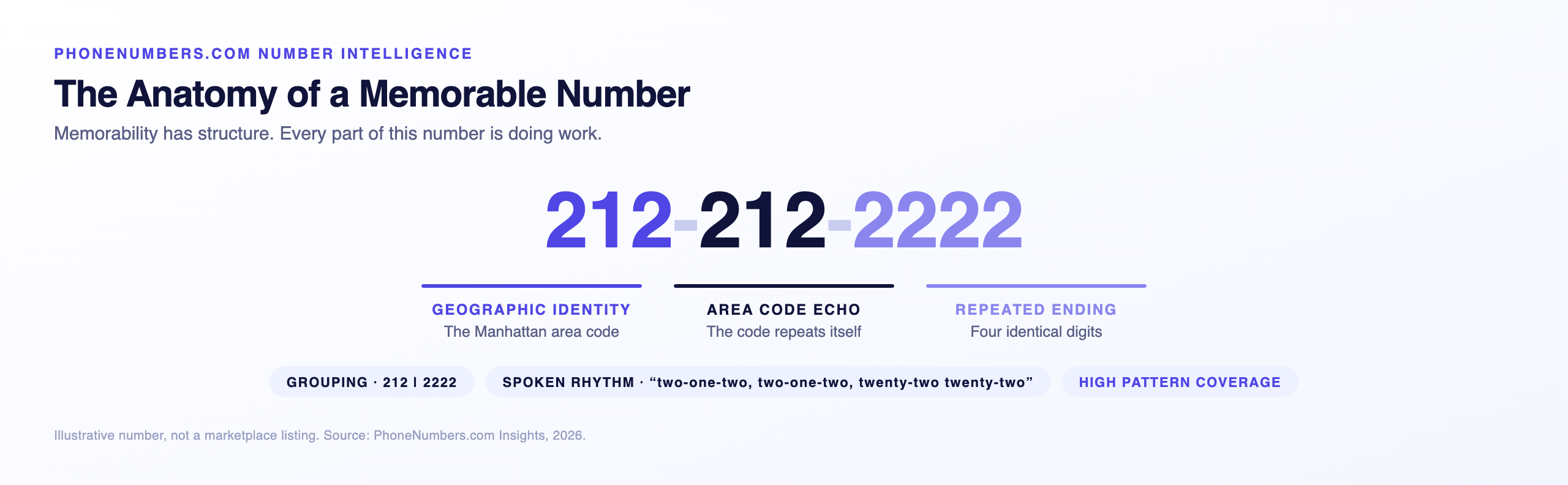
People do not necessarily remember a phone number as ten independent digits. They look for structure. A number like 305-555-0172 offers no immediately obvious pattern in its subscriber portion. A number ending 777-7777 compresses the information dramatically: once you recognize the repeating seven, there is much less to remember. A sequence like 234-5678 reads as a rule. A grouped structure like 500-5000 separates into recognizable blocks.
Each uses a different mechanism, but all reduce the apparent complexity of the number. That is the basic anatomy of memorability:
The strongest phone numbers often give the mind fewer independent pieces of information to remember.
1. Repetition
Repetition is one of the easiest structures to recognize: full repeaters such as XXX-777-7777, and less extreme versions such as XXX-777-1777, where the pattern does not occupy every digit. Repeated pairs, triples or blocks can still create structure even when the entire number is not a repeater.
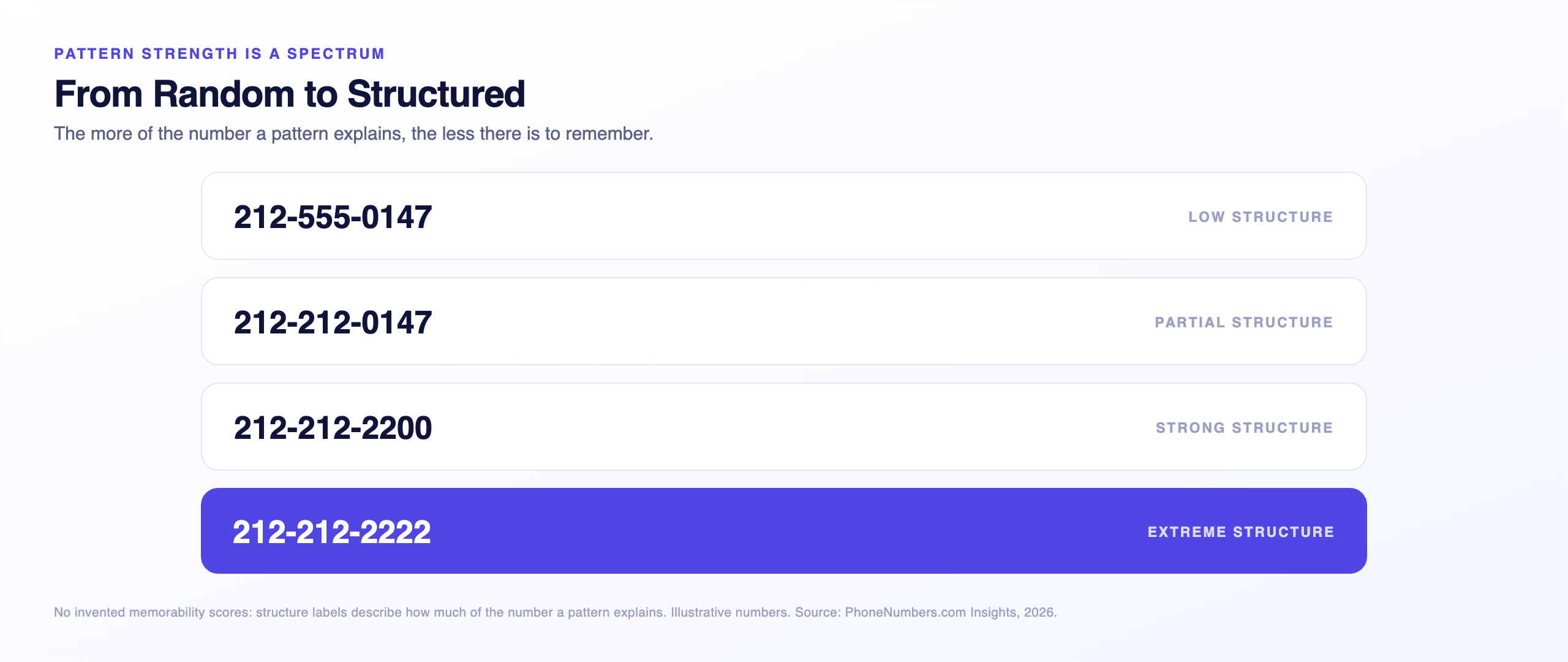
This gives us an important distinction: pattern strength exists on a spectrum. Some numbers have extraordinarily strong patterns. Others contain smaller memorable components. And others are essentially random. A useful Number Intelligence system should be able to distinguish between them.
2. Sequences
Sequences such as XXX-234-5678 create another recognizable structure. Humans recognize ordered progression quickly, which means the number can be remembered partly as a rule rather than as a collection of individual digits. You do not remember seven separate digits; you remember “one through seven.” That is an enormous reduction in cognitive complexity. Sequences can also run downward, as in XXX-765-4321. The direction changes; the underlying advantage remains.
3. Repeated Blocks
A number does not need to repeat one digit to be memorable. It can repeat groups: XXX-212-1212, XXX-454-5454, XXX-234-2345. The structure becomes recognizable because part of the number predicts what comes next. This can be especially effective when spoken: “four-five-four, fifty-four fifty-four” has a natural grouping that creates rhythm.
4. Rhythm
Some phone numbers are memorable because of how they sound. Telephone numbers are unusual identifiers because they are frequently communicated verbally: heard on the radio, spoken by a salesperson, announced in a commercial, repeated over the phone. That makes rhythm relevant.
A number ending 500-5000 naturally breaks into a spoken cadence: “five hundred, five thousand.” A number that is visually structured may therefore also be phonetically structured. For businesses that advertise through audio, that distinction can be especially important.
5. Grouping
Phone numbers already have built-in grouping: the area code, the prefix, the final four digits. But some numbers create additional internal groups. A number ending 400-4000 becomes 400 | 4000: instead of remembering seven individual digits, the person may remember two short blocks. That is a much simpler mental representation.
6. Round Numbers
Zeros can create particularly strong structures: endings such as 500-0000, 700-7000 or 100-1000 tend to be easy to recognize visually and easy to communicate verbally, creating natural spoken phrases. The precise linguistic effect depends on the number, but the principle is consistent: structured zeros reduce complexity.
7. Symmetry
Some numbers are memorable because the digits create balance: mirrored and near-mirrored patterns such as XXX-234-4432 or XXX-455-4554. These structures can be visually distinctive even when they are not as immediately obvious as a full repeater.
This is particularly interesting from a Number Intelligence perspective because symmetry is measurable. Software does not have to decide that a number looks interesting. It can identify that the first portion mirrors the second, or that a digit block repeats in reverse order. That converts a visual impression into a structured attribute.
8. Meaningful Numbers
Not every memorable number depends on repetition. Digits can also have meaning: a year, a familiar numeric phrase, a culturally recognizable sequence, an industry-relevant number or a local reference. A sequence such as XXX-867-5309 may be memorable to some audiences because the digits already carry a cultural association. A business may value a number ending in 2026 or another sequence meaningful to its brand.
But meaningful numbers are more contextual than repeaters or sequences. A pattern can be structurally obvious to almost anyone. Meaning depends on the audience.
9. Vanity Numbers
Vanity numbers take memorability in a different direction. Instead of asking people to remember digits, they allow keypad digits to represent letters, as in the famous 1-800-FLOWERS. The number communicates a word rather than a random sequence, telling the customer who to call and why to call at the same time.
A hypothetical plumbing company might use 1-800-PLUMBER; a legal service might seek a number corresponding to a relevant legal term. The underlying principle is the same as numeric memorability: reduce the amount of arbitrary information the customer must remember. A meaningful word can accomplish that extremely efficiently.
The Area Code Is Part of the Pattern
Memorability should not be evaluated only across the final seven digits. The area code contributes to the complete number. In a full ten-digit repeater, the pattern extends across every digit. In a structure like 212-212-1212, the area code itself becomes part of the repeating pattern. This can create unusually distinctive numbers.
It also illustrates why PhoneNumbers.com evaluates the complete telephone number rather than treating the area code and subscriber number as completely independent assets. Sometimes the strongest pattern crosses the boundary between them.
Memorability and Area Code Identity Can Compete
This creates one of the most interesting decisions in premium phone numbers. Suppose a Manhattan business can choose between an ordinary number in the highly recognized 212 area code and a strongly repeating number in 646. If geographic identity is the priority, 212 may matter more. If advertising recall is the priority, the repeating 646 number may be more useful.
And if both characteristics are available in one number, combining the 212 identity with a strong pattern, the buyer has a number carrying both signals. That combination can be considerably scarcer. This is where memorability, geography and scarcity begin to interact. We covered the same tension from the geographic side in 212 vs 646 vs 917.
Memorability Is Not the Same as Value
A memorable number can have characteristics that make it desirable. But memorability should not automatically be equated with monetary value. One number may contain an exceptional repeating pattern but use an area code with limited relevance to a particular buyer. Another may contain a weaker pattern but exactly the geographic identity that buyer needs. Different buyers can value them differently, and area code, availability, scarcity, vanity potential, business utility, market demand and price all enter the equation.
So memorability is better understood as a value signal, not a complete valuation model.
Read: What Makes a Phone Number Valuable? →
Pattern Strength Matters
Not all repetition is equally strong. A full seven-digit repeater has substantially more repetition than a number containing three consecutive sevens followed by unrelated digits. A complete sequence covers the whole subscriber portion; a partial sequence covers only part of it.
This suggests that Number Intelligence can go beyond asking whether a number contains a pattern. A richer analysis asks: how much of the number is explained by the pattern? That creates the possibility of measuring pattern strength.
From Pattern Recognition to Number Intelligence
Humans are very good at recognizing obvious premium numbers. Show someone a full repeater and little explanation is necessary. But evaluating ten numbers is easy, ten thousand is difficult, and a million is impossible manually. Software changes the problem.
A Number Intelligence system can analyze large portfolios for characteristics such as repeated digits, repeated blocks, sequences, reverse sequences, symmetry, alternating digits, round endings, vanity possibilities, area code interaction and pattern coverage. That allows a collection of numbers to be understood structurally rather than simply stored as a list. For a marketplace containing millions of numbers, that is a major distinction.
The Anatomy of a Number
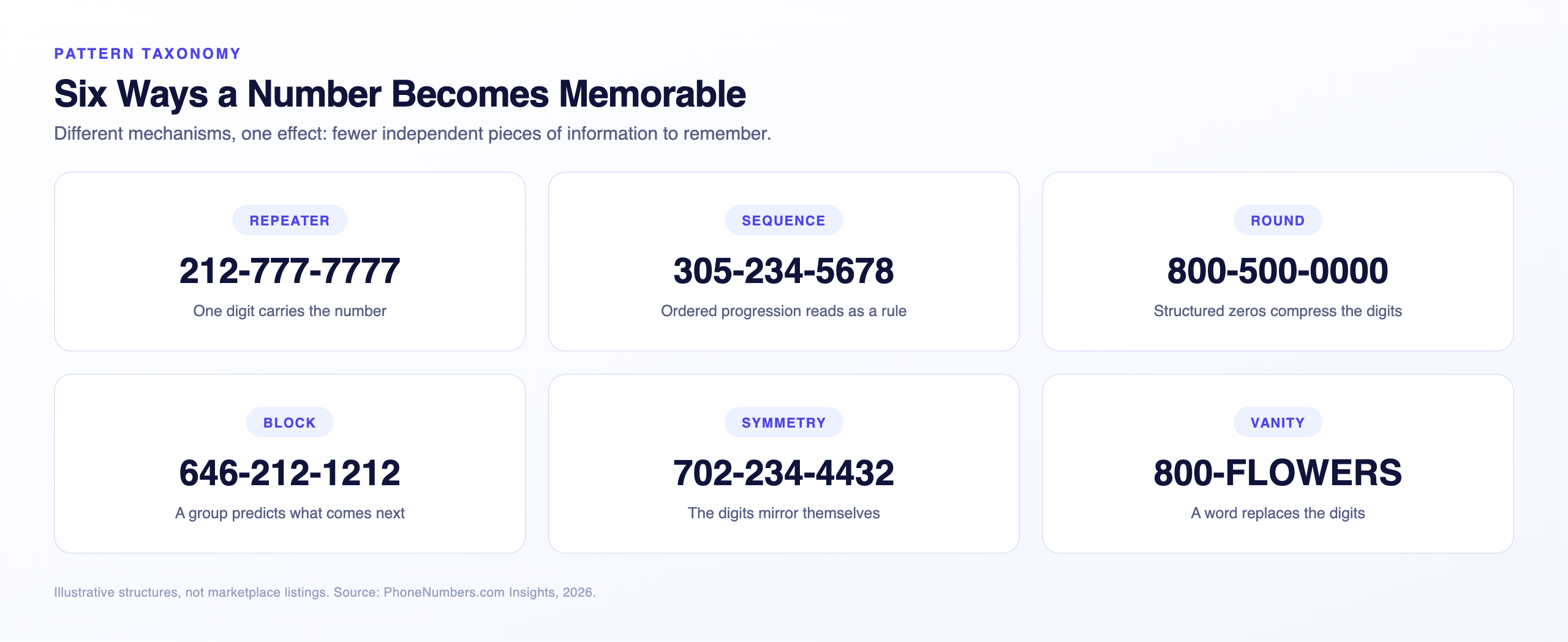
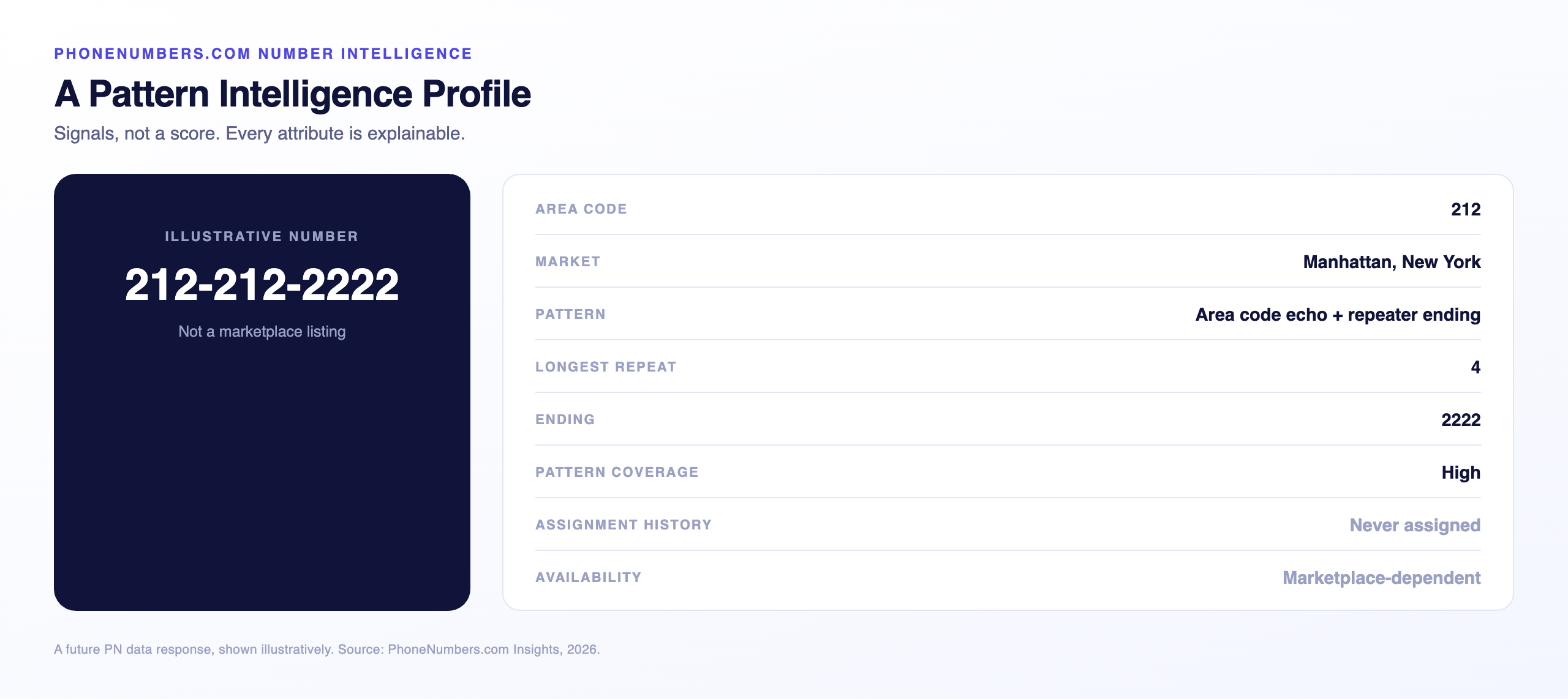
Consider the number 212-212-2222. At first glance, it simply looks memorable. But we can break down why: the 212 area code carries strong Manhattan identity; the exchange echoes the area code, repeating 212; the 2222 ending contributes four identical digits; the number groups naturally into 212 | 2222; the spoken form has rhythm (“two-one-two, two-one-two, twenty-two twenty-two”); and the entire subscriber portion participates in a recognizable structure.
Instead of describing the number as good, we can describe its characteristics. That is the difference between subjective evaluation and Number Intelligence.
Can Memorability Be Scored?
Potentially. But this is where we need to be careful. It would be easy to invent a score: memorability 94 out of 100. That number looks authoritative. But unless the methodology has been validated against actual human recall or marketplace behavior, it may simply be false precision.
A better approach starts with measurable attributes: repeating digits, longest repetition, sequence detection, repeated blocks, round endings, symmetry, vanity matches, pattern coverage. Those are explainable. Later, marketplace data can help determine whether certain combinations correlate with buyer behavior. Only then does a composite score become more meaningful. At PhoneNumbers.com, we would rather expose the signals behind the score than give a number an arbitrary rating and pretend the calculation is objective.
Marketplace Data Can Test the Theory
Pattern analysis tells us which numbers should be easier to recognize structurally. Marketplace data can help answer a different question: which patterns are buyers actually choosing? Future PhoneNumbers.com research could examine which repeating patterns appear most frequently in purchases, whether buyers favor round endings, how pattern strength interacts with area code demand, whether vanity numbers are purchased differently from premium numeric numbers, and whether particular structures command different marketplace prices.
These are measurable questions. And because PhoneNumbers.com operates a marketplace, pattern intelligence can eventually be tested against actual buyer behavior rather than relying entirely on opinion.
Memorability at Scale
This is where the B2B application becomes important. A company controlling a large portfolio of telephone numbers has, without structured intelligence, simply a million telephone numbers. With Number Intelligence, it could understand how many are repeaters, how many contain sequential patterns, how many have round endings or mirrored structures, how many match vanity words, and how many carry high pattern coverage.
The transformation is the point: a database of numbers becomes a classified portfolio. That has applications for marketplaces, carriers, communications providers, numbering administrators, enterprise telecom teams and other businesses managing large collections of numbers.
Search Can Become Smarter Too
Traditional number search often starts with an area code. That is useful. But Number Intelligence enables much richer queries: repeating 305 numbers, 212 numbers ending in 0000, numbers with alternating patterns, toll-free numbers containing a home services vanity word, the strongest numeric patterns available in 888.
The buyer does not need to know the exact number in advance. They can describe the characteristics they want. That is a fundamentally different marketplace experience.
AI Can Make Pattern Search Conversational
Structured pattern intelligence also creates an obvious AI application. Instead of manipulating dozens of filters, a buyer could say: find me a memorable Manhattan number for a law firm. The AI layer can interpret the request, but it still needs structured data underneath it: Manhattan maps to relevant area codes, memorable maps to pattern characteristics, law firm maps to business utility, and availability comes from the marketplace.
Then it can rank and explain potential matches. The important architecture is data, then intelligence, then AI, not AI guessing. The full stack is described in Look Beyond the Digits.
The Best Number Depends on How It Will Be Used
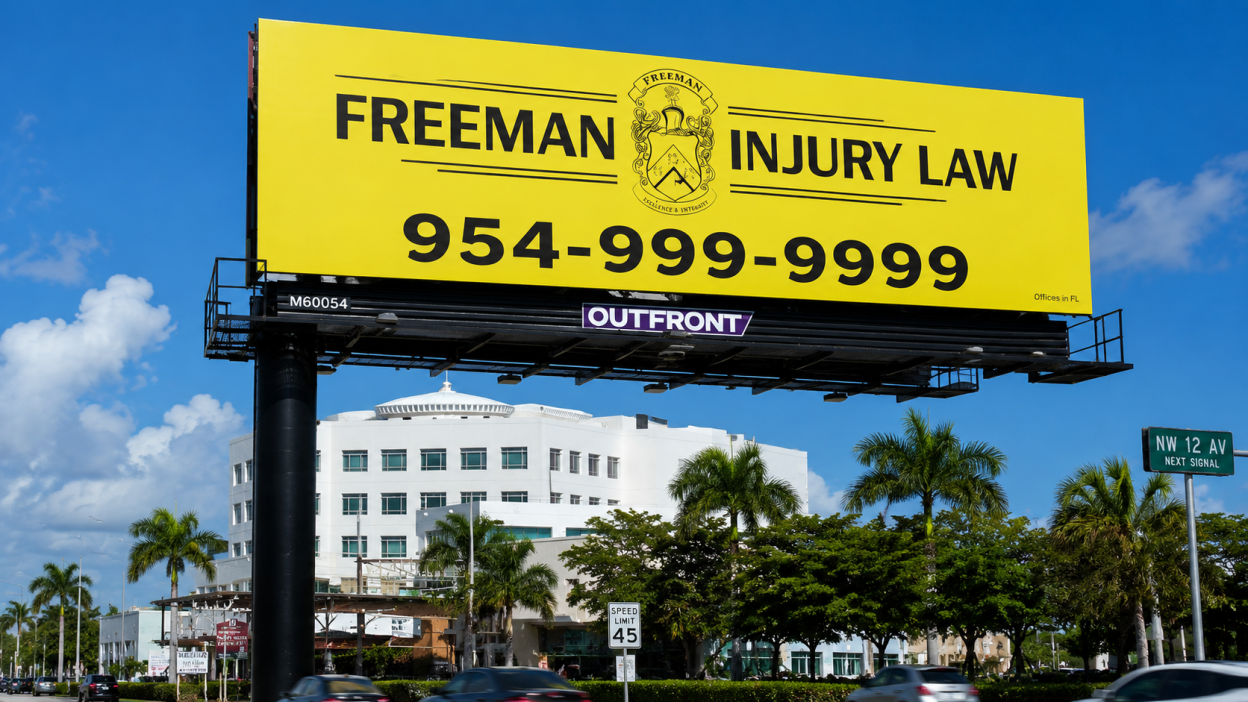
A memorable number for a billboard may not be the same as a strong number for an executive’s direct line. For radio, spoken rhythm and easy recall are especially important. For outdoor advertising, visual pattern recognition matters. For search advertising, brand relevance or vanity structure may matter more. For sales, a number that prospects can easily repeat is useful. For customer service, a simple national toll-free identity may matter. For a local business, area code recognition can compete with pattern strength.
There is no single perfect pattern for every business. The intended use helps determine which characteristics matter most.
The Scarcity of Memorable Numbers
Every individual phone number is unique, but that is not the useful definition of scarcity. The relevant question is how many comparable numbers exist. There may be many numbers in a particular area code. There are far fewer where six or seven digits form an exceptional pattern. Fewer still combine a desirable area code, a strong pattern, business relevance and actual availability.
As constraints are added, the pool of comparable numbers shrinks. That is why particularly strong combinations can become premium assets: not because they are ten unique digits, but because few substitutes offer the same characteristics.
A Memorable Number Can Become Part of the Brand
For some businesses, the telephone number is simply a contact method. For others, it becomes part of the brand itself, appearing on vehicles, in advertising, on signage, in jingles, on packaging, in URLs, on social media and in everyday customer conversation.
A number that customers can remember without looking it up has a different kind of utility from a random number stored only in a contact list. This is particularly relevant for businesses where calls directly generate revenue: the number is not merely routing infrastructure. It can become a customer acquisition asset.
New Numbers and Memorable Numbers
There is another characteristic worth considering when selecting a long-term business number: assignment history. A memorable number may be attractive because of its pattern, but businesses may also care whether the number has previously been assigned to another subscriber. Phone numbers in the broader telecommunications ecosystem can be disconnected and eventually reassigned.
By contrast, the numbers offered through the PhoneNumbers.com marketplace are new numbers that have never previously been assigned to an end user. That means a business can evaluate both the characteristics of the number and its assignment history. For a company planning to build a long-term identity around a memorable number, both can matter.
Read: Why Your New Phone Number May Have a History →
How to Evaluate a Memorable Phone Number
When comparing numbers, look at them in this order.
1. Say it aloud
Does the number have natural rhythm?
2. Look away
Can you reproduce it a few seconds later?
3. Identify the pattern
What exactly makes it memorable?
4. Look at the whole number
Does the area code strengthen or weaken the identity?
5. Consider the business
Does the number fit how it will actually be used?
6. Compare alternatives
How scarce are numbers with similar characteristics?
7. Consider assignment history
Is the number new or previously assigned?
8. Consider market signals
What does marketplace behavior tell us about similar numbers?
This turns “which number looks best?” into a structured evaluation.
Frequently Asked Questions
What makes a phone number memorable?
Common characteristics include repetition, sequences, repeated blocks, rhythm, grouping, symmetry, round number structures and meaningful vanity words. Multiple characteristics can appear in the same number.
Are repeating phone numbers easier to remember?
Repeating digits create obvious structure and reduce the amount of seemingly unrelated information a person has to retain. The exact effect on recall depends on the number and context.
What is a repeater phone number?
In marketplace terminology, a repeater generally refers to a number containing a strong repeating digit or digit block pattern. Exact classifications can vary depending on the marketplace.
Are sequential phone numbers valuable?
Sequences can make numbers distinctive and easy to recognize, but sequence alone does not establish monetary value. Area code, scarcity, demand, availability and intended use also matter.
Is a vanity number more memorable than a numeric number?
Not necessarily. A strong word can be extremely memorable, but an exceptional numeric pattern can be equally distinctive. The better choice depends on the number and intended audience.
Does the area code affect memorability?
Yes. The area code is part of the complete telephone number and can contribute geographic identity, recognition and sometimes the number’s overall pattern.
Can software identify memorable phone numbers?
Yes. Many structural characteristics, such as repetition, sequences, symmetry and repeated blocks, can be detected algorithmically. Determining how memorable a number is to humans requires more careful methodology.
Can AI find memorable numbers?
AI can help interpret a buyer’s request and search structured listings, but the underlying number characteristics should come from reliable pattern and marketplace data rather than being invented by the AI.
Are PhoneNumbers.com numbers previously used?
No. Numbers offered through the PhoneNumbers.com marketplace are new and have never previously been assigned to an end user.
About PhoneNumbers.com Number Intelligence
A memorable phone number is not simply one that looks good. Its structure can be analyzed. Repetition can be detected. Sequences can be identified. Patterns can be classified. Geographic identity can be understood. Marketplace behavior can add additional context.
PhoneNumbers.com is building toward a structured intelligence layer that makes those characteristics searchable, understandable and eventually accessible programmatically. Because behind every memorable number is something that made it memorable. The intelligence is understanding why.

Explore Number Intelligence → Read: What Makes a Phone Number Valuable? → Explore Area Code Intelligence →
Search Memorable Phone Numbers →
More from PhoneNumbers Insights
Area codes
- America’s Most In-Demand Area Codes of 2026
- 212 vs 646 vs 917: Understanding New York’s Most Recognized Area Codes
- The Original Area Codes: Why Legacy Codes Still Matter
- The Intelligence Behind an Area Code
Toll-free numbers
- 800 vs 888 vs 877: Which Toll-Free Prefix Is Best?
- The Evolution of Toll-Free Numbers: From 800 to 833
- Local vs Toll-Free Numbers: Which Is Right for Your Business?
Choosing & buying a number
- How to Choose a Business Phone Number
- How to Get a Vanity Phone Number for Your Business
- What Makes a Phone Number Valuable?