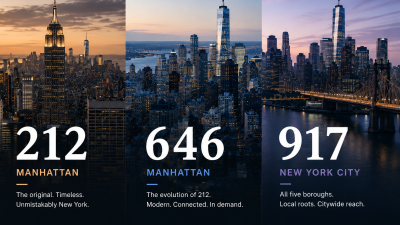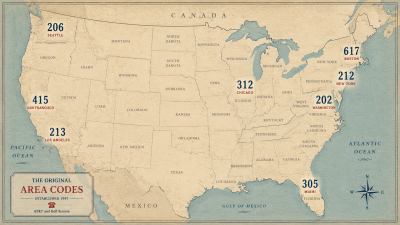
An area code is the first three digits of a North American phone number, formally known as a Numbering Plan Area, or NPA. But an area code carries more than a geographic label. It can tell us what numbering region a number is associated with, whether the code is original, the product of a split, or part of an overlay, which other codes serve the same market, and, when combined with marketplace data, how buyers are responding to that telephone identity.
That makes an area code one of the first layers of phone number intelligence. The digits tell us where to start. The intelligence comes from understanding what sits behind them.
What Is an Area Code?
Within the North American Numbering Plan, telephone numbers generally follow a ten-digit structure: NPA-NXX-XXXX. The first three digits are the Numbering Plan Area, commonly called the area code. The North American Numbering Plan Administrator manages numbering resources for the US and its territories, and the broader plan serves multiple countries and territories sharing country code +1.
For most people, the practical interpretation is simple: 212 means New York, 305 means Miami, 702 means Las Vegas, 202 means Washington, DC. But the numbering system underneath those familiar associations is considerably more complex. An area code may cover an entire state, part of a state, a metropolitan area, or substantially the same geography as several other area codes.
That history creates information.
The First Layer: Geography
The most obvious intelligence contained in an area code is geographic association. A geographic area code connects a phone number with a Numbering Plan Area, and that can provide immediate context about the market a number is intended to serve.
For a business, that context may matter. A company entering Miami might deliberately seek a 305 number. A firm establishing a Manhattan presence might consider 212, 646, 332 or 917. A Seattle-focused business might prefer 206.
The phone itself does not need to be physically located within that area for the area code to communicate a geographic identity. Modern telecommunications systems allow numbers to be routed and used far beyond the physical location where the numbering code originated. That distinction is important:
An area code indicates numbering geography. It does not necessarily establish the present physical location of the person or business using the number.
This is why area code data should be treated as context, not proof of location.
The Second Layer: Numbering History
Area codes also tell a story about the growth of the telephone network. The North American Numbering Plan was developed in 1947 to make direct long-distance dialing practical, with implementation beginning in the early 1950s. As population, businesses, mobile devices and communications services increased the need for telephone numbers, existing numbering regions eventually required additional capacity.
Historically, there were two primary ways to provide it: geographic splits and overlays. Understanding which process produced an area code provides another layer of intelligence.
Geographic Splits
Under a geographic split, an existing numbering region is divided. One part retains the original area code. Another receives a new one. That can permanently change the geographic identity of both codes.
New York is a classic example. The original 212 area code once covered all five boroughs of New York City. Over time, new numbering regions were created, eventually leaving 212 principally associated with Manhattan. That makes the history of 212 part of the reason the code means what it does today.
A geographic split does not merely create more numbers. It can create new telephone identities.
Overlays Changed the Model
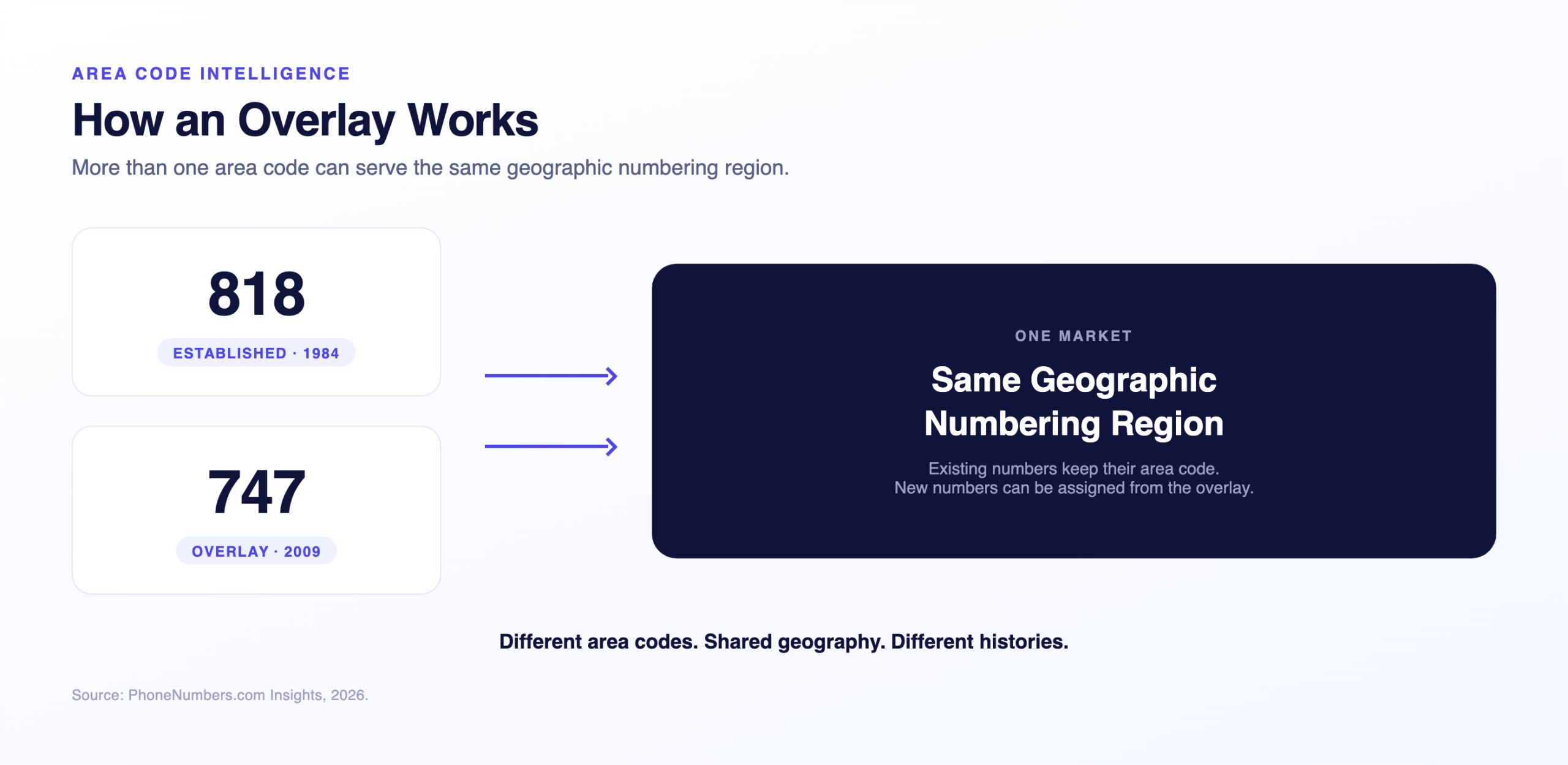
An overlay works differently. An area code overlay is a situation where more than one area code serves the same geographic area. Existing customers keep their numbers, while new numbers can be assigned from the additional code.
That means 818 and 747 can serve the same numbering region. Likewise 310 and 424, and numerous other overlay combinations around the country. Under an overlay, the geography may be substantially the same. The area code identity is different.
That creates one of the most interesting questions in modern phone number intelligence:
When two area codes serve the same market, do buyers treat them the same way?
Our marketplace data suggests the answer is not always yes.
Geography and Identity Are Not the Same Thing
An overlay demonstrates why an area code cannot be understood through geography alone. Suppose a business has a choice between an 818 number and a 747 number. Both may represent the same Los Angeles region numbering market. But one was established earlier, and the other entered the numbering system later.
Does that affect the way customers perceive the number? Does it affect availability? Does it affect buyer demand? Does an exceptionally memorable 747 number outperform an ordinary 818 number? Those are market intelligence questions, not numbering plan questions.
The numbering system tells us the codes share geography. Marketplace data tells us how buyers actually respond. That distinction is central to PhoneNumbers.com’s approach.
The Third Layer: Overlay Relationships
Every area code exists within a broader numbering environment. For some codes, that environment is simple. For others, multiple area codes may serve the same geographic region. The collection of codes serving the same region is known as an overlay complex. Documented examples include 310/424, 619/858, 747/818 and 916/279, among many others.
For number intelligence, these relationships matter because they allow us to compare codes serving similar markets. Rather than asking whether 310 is popular, we can ask how marketplace activity for the 310 area code compares with the 424 area code serving the same market. That is a far more useful question.
The Fourth Layer: Market Demand
The numbering system tells us where an area code belongs. Marketplace activity can tell us something different: whether buyers are choosing it.
PhoneNumbers.com’s 2026 marketplace study ranks geographic area codes according to relative frequency in completed phone number purchases across the marketplace and partner network. Several findings demonstrate why this matters. 212, one of America’s longest established area codes, ranked No. 2. Yet newer overlays also ranked near the top: 747 at No. 3 and 929 at No. 4.
Area code age alone does not determine marketplace demand.
An older code can carry considerable identity and recognition. A newer overlay can still generate substantial purchasing activity. The market sees more than history.
Area Code Intelligence vs Area Code Popularity
These ideas should not be confused. Popularity is a broad, imprecise concept. It might refer to population served, cultural recognition, search volume, marketplace purchases, availability or public familiarity. Area Code Intelligence is broader. It asks us to combine several signals:
| Intelligence layer | Question |
|---|---|
| Geography | What market does the code serve? |
| Numbering history | When and why was it introduced? |
| Area code type | Established, split, overlay or non-geographic? |
| Overlay relationships | What other codes serve the same market? |
| Marketplace activity | How frequently are buyers choosing it? |
| Historical movement | Is demand rising, falling or stable? |
| Availability | What kinds of numbers are available? |
| Number quality | What characteristics do the individual numbers contain? |
The area code becomes one structured data object with multiple attributes, rather than three digits attached to a city name.
The Fifth Layer: Historical Movement
A ranking at one point in time is useful. Movement over time is more informative. An area code that climbs through the rankings year after year suggests a very different marketplace pattern from one that slides. The underlying transaction volumes can remain proprietary. The rank movement itself can still tell us something useful about the evolution of marketplace activity.
This is why PhoneNumbers.com is developing historical Area Code Market Intelligence. Our goal is to track how area code rankings change over time rather than treating an annual Top 20 as an isolated list. That turns a snapshot into a dataset.
A historical view of how leading area codes have moved through the marketplace rankings over time, with views by year, region, established versus overlay, and ranking movement. Publishing here when the full historical dataset is validated.
The Sixth Layer: Availability
Demand cannot be interpreted without thinking about supply. Imagine two area codes. In the first, buyer interest is high and many numbers are available. In the second, buyer interest is equally high but very few desirable numbers remain. The transaction patterns may look different even if underlying demand is strong in both.
This is one reason PhoneNumbers.com does not treat purchase frequency as a complete measure of value. Availability matters. And within an area code, number quality matters too: a large pool of random numbers is not equivalent to a smaller pool containing highly memorable numbers. So Area Code Intelligence becomes more useful when connected with the numbers actually available.
The Seventh Layer: The Number Beneath the Area Code
An area code provides context. The remaining seven digits provide additional intelligence. Compare 212-555-0147 with 212-555-5555. The geographic identity is identical. The number structure is not: one contains a highly obvious repeating pattern, and the other does not.
That means an individual phone number can be analyzed across at least two levels. Area Code Intelligence covers geography, history, overlay relationships, demand and regional identity. Number Intelligence covers pattern, memorability, carrier and line attributes, history, availability and marketplace characteristics. Combined, those layers create a much more complete understanding of the number. For the full framework, see What Makes a Phone Number Valuable?
A Practical Example: 212
A simple area code directory might tell us that 212 means Manhattan, New York. Useful, but incomplete. Area Code Intelligence can add more:
That transforms 212 from a location label into a structured intelligence profile. The details behind it live in our 212 vs 646 vs 917 comparison and the 2026 rankings.
A Practical Example: 747
Now consider 747. Geographically, the 747 area code serves the same numbering region as 818. Historically, it is newer. Yet in PhoneNumbers.com’s 2026 marketplace ranking, 747 ranked No. 3 while 818 ranked No. 6.
That is exactly the sort of result that demonstrates why telephone history alone is not enough. The numbering plan explains what 747 is. Marketplace data helps explain how buyers are behaving around it. Those are complementary forms of intelligence.
Area Codes Can Change Without Geography Changing
When an overlay is introduced, the geographic market does not necessarily change. What changes is the numbering capacity available within it. Numbering relief exists because resources within an existing area are projected to become insufficient; overlay relief adds another area code within the same territory while existing customers keep their numbers.
From an operational perspective, that solves a numbering capacity problem. From a market intelligence perspective, it creates a new identity that buyers can begin selecting. Over time, that identity can develop its own marketplace behavior.
What an Area Code Cannot Tell You
Area Code Intelligence is useful precisely because we understand its limitations. An area code alone generally cannot tell you:
- The caller’s present physical location. A number can travel with its user or be routed remotely.
- Who currently controls the number. Area code geography does not establish identity.
- Whether a number is mobile, landline or VoIP. That requires additional number-level intelligence.
- Whether a number has been ported. Portability can separate the current network relationship from the original assignment.
- Whether the number is trustworthy. Geographic association should never be treated as evidence of legitimacy.
- What the number is worth. Area code is only one characteristic influencing marketplace value.
These distinctions matter in business applications. No responsible number intelligence system should infer more from an area code than the data actually supports.
Why Area Code Intelligence Matters to Businesses
For most consumers, area codes are background infrastructure. For businesses, they can influence several decisions.
Market presence
A local number may reinforce a company’s association with a particular region.
Expansion
Companies entering a new geographic market may need to understand which codes serve that location and how overlays relate to one another.
Number acquisition
Marketplace buyers can compare established and newer codes while evaluating available numbers.
Data enrichment
Area code attributes can provide geographic context within larger telecommunications datasets.
Analytics
Historical marketplace activity can reveal how buyer preferences change.
APIs
Structured area code intelligence can eventually be consumed programmatically rather than requiring users to manually research individual codes. This last point is where the subject becomes particularly important for PhoneNumbers.com.
From Area Code Pages to Area Code Data
Most area code websites were built as directories. You enter 305 and receive Miami, Florida. That model is useful but limited. PhoneNumbers.com is building toward something broader. An area code can be represented as structured data:
area_code:      305
type:           Geographic
market:         Miami
state:          Florida
overlays:       [...]
market_rank:    [...]
historical:     [...]
available:      [...]
Additional data layers can then be connected as appropriate. The result is not merely an area code guide. It is an Area Code Intelligence layer. And eventually, the same intelligence that appears on a webpage can be made available to software through APIs.
The B2B Opportunity
For a business or software platform, knowing that an area code belongs to a particular city is useful. Knowing the broader context can be considerably more useful. Imagine a CRM, communications platform, marketplace or analytics system able to query: What market does this area code represent? What overlays serve the same region? Is this code established or newly introduced? How has marketplace interest changed? What additional intelligence is available for the complete number?
This is how area code information becomes infrastructure rather than content. The article you are reading is the human-readable version. The underlying concept is structured intelligence.
Area Code Intelligence Is Only the Beginning
A phone number has multiple layers. The area code tells us something. The prefix tells us something else. Carrier and line information add additional context. Portability and assignment history can change what we know. The complete digit pattern can have marketplace characteristics. And transaction data can show how buyers behave.
Those layers can increasingly be connected. That is the larger opportunity behind PhoneNumbers.com: understanding the intelligence behind every number. Area codes are one of the most visible places to start.
Frequently Asked Questions
What information does an area code provide?
A geographic area code identifies a Numbering Plan Area within the North American Numbering Plan. It can provide geographic and numbering plan context, including the market associated with a phone number and relationships with overlay area codes.
What is an area code overlay?
An overlay occurs when multiple area codes serve the same geographic area. Existing customers generally keep their numbers while new numbers can be assigned from the additional code.
Can two area codes cover the same city?
Yes. Overlay plans allow multiple area codes to serve substantially the same geographic market.
Does an area code tell you where someone is located?
Not necessarily. It identifies the numbering geography associated with the phone number, but portability, mobile service and modern routing mean the current user may be located elsewhere.
Does an older area code have more value?
Not automatically. Older codes may have more established market identities, but PhoneNumbers.com’s marketplace research also shows strong buyer activity for newer overlays. The quality of the complete phone number and buyer demand also matter.
What is an NPA?
NPA stands for Numbering Plan Area, the formal term for an area code within the North American Numbering Plan.
Who manages US area codes?
The North American Numbering Plan Administrator administers numbering resources in the US and its territories under regulatory authority and industry guidelines.
Where can I look up an area code?
PhoneNumbers.com provides area code pages for US and NANP area codes, such as the 212 area code and 305 area code pages, with geographic information, overlays, related research and available phone numbers.
About PhoneNumbers.com Area Code Intelligence
PhoneNumbers.com is building a structured intelligence layer around telephone numbers. Area Code Intelligence combines numbering plan information, geography, overlay relationships and marketplace signals to provide context around the first three digits of a phone number. It is part of a broader Number Intelligence platform designed to help businesses understand, analyze and work with phone number data.
Explore Area Code Intelligence → Explore Market Research → Explore Number Intelligence →
Search Available Phone Numbers →
More from PhoneNumbers Insights
Area codes
- America’s Most In-Demand Area Codes of 2026
- 212 vs 646 vs 917: Understanding New York’s Most Recognized Area Codes
- The Original Area Codes: Why Legacy Codes Still Matter
Toll-free numbers
- 800 vs 888 vs 877: Which Toll-Free Prefix Is Best?
- The Evolution of Toll-Free Numbers: From 800 to 833
- Local vs Toll-Free Numbers: Which Is Right for Your Business?
Choosing & buying a number
- How to Choose a Business Phone Number
- How to Get a Vanity Phone Number for Your Business
- What Makes a Phone Number Valuable?
- The Anatomy of a Memorable Phone Number